
Project scientific lead: Bulat Valitov, Candidate of Medical Sciences.
Project initiator and participant: Oleg Pogozhev.
Prepared for consideration by the scientific lead. Contains analysis of published literature and proposed protocols.
Abstract
This work evaluates the roles of viral infection, vaccination and antiviral immune response characteristics in the onset and progression of type 1 diabetes (T1D), and develops a programme of testable studies for SP Science. A targeted critical review of published research and evidence mapping was undertaken. The search was completed on 12 October 2026. The register contains 68 sources spanning prospective cohorts, donor tissue, genetics, functional experiments, randomised interventions, meta-analyses and methodological documents. This is not a completed PRISMA systematic review and does not contain original experimental data.
The most consistent body of findings concerns enteroviruses, particularly Enterovirus B. Prospective detection of infection before seroconversion, signs of infection in pancreatic tissue and genetic associations involving viral RNA sensing support a contribution to some pathways of disease development. Limitations include study heterogeneity, negative RNA-seq findings, detection that depends on residual beta cells, and the absence of a demonstrated T1D-preventive effect of an antiviral vaccine. The short-term effect of pleconaril and ribavirin on C-peptide was not sustained at two and three years.
Increased T1D incidence during the pandemic is established in many studied populations, but does not by itself demonstrate that SARS-CoV-2 initiates autoimmunity. The findings are compatible with age differences, acceleration of an existing process and changes in ascertainment. No convincing, reproducible increase in T1D risk has been established for the routine childhood vaccines studied; limitations concerning rare subgroups and individual platforms remain.
The hypothesis of enhanced antiviral protection coexisting with autoimmune vulnerability is biologically plausible, but observations of infrequent, mild colds do not measure this mechanism. We propose testing the duration and cell specificity of interferon responses, the structure of anti-enteroviral immune memory and their relationship to residual beta-cell function. The programme prioritises reproducible functional measurements with independent validation, followed by analysis of samples collected before seroconversion. Causal conclusions about an individual child based on retrospective history or a current immune profile are not justified.
Keywords: type 1 diabetes; enterovirus; Coxsackie B; IFIH1; MDA5; type I interferon; islet autoimmunity; COVID-19; vaccination; molecular mimicry.
1 Purpose and status
This document is a scientific evidence review and a proposed research programme for the SP Science research centre. It has been prepared for consideration by the project's scientific lead, Bulat Valitov, with the participation of research initiator Oleg Pogozhev. Listing these roles does not mean that the text has already been approved, that the experiments proposed below have been performed, or that the scientific lead endorses the authors' interpretations. Version 1.0 is intended for scientific discussion, protocol refinement and selection of partner laboratories.
The review distinguishes three events: the onset of islet autoimmunity, progression of existing autoimmunity to clinical T1D, and registration of the diagnosis. Conflating these events can create a false causal link between a recent event and a disease that may have been developing earlier. Stages characterised by multiple autoantibodies may exist before clinical symptoms [1, 2].
The practical output is a selection of measurable hypotheses and projects capable of producing new data with the centre's limited resources. Identifying a specific therapeutic solution requires further evidence. The present programme does not prescribe experimental treatment, change insulin therapy or provide grounds for declining vaccination.
2 Questions and search methods
The main questions are whether viruses contribute to the causal chain of T1D; at which stage they act; how evidence on vaccination compares with evidence on infection; whether enhanced antiviral responses can coexist with autoimmune vulnerability; and which measurements can test this independently of the severity of colds.
The work used thematic English-language web searches of scientific literature, leading to PubMed, PubMed Central, journal websites and official methodological resources. Bibliographic links between key papers were also used. Priority was given to primary publications and newer studies capable of changing the interpretation of earlier findings. Negative and contradictory results were specifically considered. A preprint was distinguished from peer-reviewed literature. No formal exhaustive export of PubMed, Embase, Scopus or Web of Science was performed.
The final search date was 12 October 2026. Publications were selected for their relevance to islet autoimmunity, clinical T1D, viral exposures or measurable immune mechanisms. Studies exclusively about type 2 diabetes were not used as evidence of autoimmune T1D. Studies of pancreatic injury in COVID-19 were considered separately from evidence of autoimmunity. Case reports were retained as sources of signals, not estimates of causal risk.
The principal search themes actually used are presented in Appendix A. A publication-ready systematic review would require a prospectively registered protocol, independent selection by two reviewers, export of all records, an exclusion log and full-text access. Reporting frameworks include PRISMA 2020 and PRISMA-ScR [58, 59]. This version does not claim full compliance with either framework.
For each source, the separate register records an identifier, year, title, design, main finding, limitation, accessible level of text and persistent link. Where full text was unavailable, the abstract and available excerpts from the primary source were used. Detailed assessment of every bias domain remains incomplete for these studies. The bibliography lists the first author where the name was verified; other entries are given by title with a direct link to full metadata.
Statistical estimates are reproduced from the publications. No new meta-analysis was performed. OR, RR, HR and IRR were not pooled into one measure. Meta-analyses published in different years may include the same studies; separate publications from DiViD, PROVENT, TEDDY and nPOD are not treated as independent simply because they are separate papers. The number of sources is not the number of independent cohorts.
Confidence assessments in Section 9 are qualitative analytical judgements with explicit limitations, not a formal GRADE assessment. ROBINS-E for exposure studies and RoB 2 for randomised controlled trials are proposed for the next version [60, 61].
3 Distinguishing association from causation
An infection may precede autoimmunity, contribute to beta-cell loss when autoimmunity already exists, or create metabolic stress that makes previously unrecognised insulin insufficiency clinically apparent. An additional pathway is ascertainment: an ill child is more likely to be tested and observed. These processes may coexist in one patient.
The most useful basis for causal inference is a sequence of independent evidence: exposure before autoimmunity; a reproducible biological mechanism; an association with genetically or functionally defined susceptibility; and a change in outcome after intervening on the proposed cause. Viral RNA in blood around diagnosis is informative, but does not automatically identify the virus that first initiated the process.
Viral antigen or individual RNA fragments must be distinguished from evidence of replication. HLA class I and an interferon signature describe a tissue response but are not specific to viral infection. A negative blood test does not exclude a local low-level process, while a positive test does not establish pancreatic localisation. These limitations matter when comparing tissue and peripheral studies [10, 11, 12, 13].
Sequence similarity between a viral protein and an autoantigen is not equivalent to T-cell cross-reactivity. Evidence of mimicry requires presentation of epitopes by a particular HLA molecule, recognition by the same receptor and a functional response. Even that finding would not establish what proportion of T1D cases is explained by the mechanism.
4 Enteroviruses and Coxsackie B
4 1 Epidemiological signals and temporal sequence
The meta-analysis by Isaacs and colleagues included 60 studies and 12,077 participants; 56 studies entered the quantitative synthesis. Associations were reported for islet autoimmunity, OR 2.1 with 95% CI 1.3-3.3, and clinical T1D, OR 8.0 with 95% CI 4.9-13.0. Heterogeneity, I², was 63% and 85%, respectively [3]. Earlier meta-analyses show a consistent signal but partly draw on the same evidence base [4, 5].
A large OR in a comparison of patients and controls must not be interpreted as an eightfold probability of T1D in every child after an enteroviral infection. Many measurements were taken close to diagnosis, when disease, immune responses and infection detection already differ. These findings describe an association more convincingly than its direction.
Prospective sequence is more informative. In TEDDY, consecutive detection of EV-B in stool was associated with subsequent islet autoimmunity (IA), OR 3.05 with 95% CI 1.64-5.69, but the corresponding association with clinical T1D was not established in that study [6]. In DIPP, serial samples from 129 children who later became autoantibody-positive and 282 controls indicated that enteroviral events could precede seroconversion by months [7]. In DAISY, blood viral RNA was associated with acceleration of existing IA, but positive events were few [9].
Results depend on the virus type and immune context. In the study by Laitinen, CVB1 was associated with IA risk, whereas CVB3 and CVB6 were associated with lower risk [8]. Possible cross-protection merits testing, but an observational association is not evidence in favour of protective infection. The effect of the whole CVB group cannot be inferred from one serotype.
4 2 Pancreatic tissue and conflicting methods
In the small DiViD study of newly diagnosed adults, VP1 and enteroviral RNA were detected in islets; initially, RNA was detected in four of six patients and none of six controls [10]. Subsequent molecular characterisation used the same patients and therefore extends rather than independently replicates the finding [11].
A collaborative nPOD analysis published in 2025 covered 197 donors and 645 tests. Combinations of markers were more often detected in T1D with residual insulin-containing islets. However, RNA-seq detected no viral sequences, and the individual EV-PCR difference between this group and controls was not statistically significant. Some strong marker combinations included HLA-I, which is not virus-specific [12]. The 645 tests must therefore not be counted as 645 independent confirmations, nor a combination of a viral and an immune marker as two direct demonstrations of viral replication.
A separate HPAP study also found no EV-B sequences in bulk or single-cell RNA-seq. The authors allowed for very low-level infection, but their findings do not support universal chronic EV-B infection as the principal mechanism of all T1D [13]. This substantive negative observation needs to be addressed through measurement sensitivity and tissue heterogeneity rather than excluded from the review.
The conclusion for enteroviruses is that temporal, tissue and mechanistic evidence supports a contribution to disease in some people. The attributable proportion of cases, necessary serotype, duration of the process and detectability in peripheral blood remain uncertain. The apparent importance of residual beta-cell mass may reflect available target cells, disease stage or donor selection; causal direction requires testing.
4 3 Mimicry and other mechanisms
Viruses may act through beta-cell damage and stress, prolonged local inflammation, altered autoantigen presentation and activation of existing autoreactive cells. Molecular mimicry remains one possible mechanism. In the 1998 Horwitz model, findings supported bystander damage rather than mimicry [14]. Roep's study showed that proposed linear homologies between GAD65 and CVB do not invariably produce cross-reactive responses [15].
Ashton and colleagues described incomplete immunity to CVB and overlap of some T-cell receptors responding to GAD65 and a viral peptide [16]. These results justify testing specific clones, but do not establish universal mimicry. The presence of GAD-reactive cells alone is also insufficient: such cells occur in healthy people, and the functional nature of the response matters [66].
The social-media post that prompted this review misidentified the journal of the Horwitz paper. Its claim that AI has confirmed a single cause of T1D is not supported by an identifiable study. Computational predictions of structure or binding can select candidates but cannot replace functional and clinical evidence.
5 Immune reactivity and the strong immunity hypothesis
5 1 Genetic and functional rationale
IFIH1 encodes MDA5, a sensor of viral RNA. In the genetic study by Nejentsev, four rare variants were associated with reduced T1D risk, OR 0.51-0.74; the associations were tested in more than 30,000 participants [17]. Downes and colleagues linked the protective genetic configuration to reduced IFIH1 expression [18]. These findings concern a particular immune pathway, rather than globally stronger or weaker immunity.
In Gorman's experiments, the A946T variant enhanced interferon signalling; in models this combined protection against a particular viral challenge with greater autoimmune vulnerability [19]. In human islets, genotype was also associated with features of the CVB response [20]. However, Taylor in 2024 found increased basal signalling in cellular models but no significant difference in the IFN response to CVB3 in PBMCs from healthy donors with different genotypes [67]. Effects therefore depend on cell type, conditions and host state; one SNP is not a ready-made functional diagnosis.
In BABYDIET, a transient IFN signature preceded autoantibody development in some high-risk children [21]. In Rodrigues' 2020 functional study, whole-blood stimulation revealed IFN-I hyper-responsiveness in established T1D, without the same change in all immune pathways measured [68]. These data support testing a particular pathway but do not establish causal sequence in longstanding T1D.
5 2 Local responses and systemic symptoms
In human beta-cell models, IFN-alpha can increase HLA-I, endoplasmic reticulum stress and cell death; multi-omic data further characterise this response [22, 23]. Blood IFN responses cannot automatically be extrapolated to the pancreas or inferred from the severity of a runny nose.
A parent's observation of infrequent, mild viral illnesses is a useful starting question. It does not distinguish infrequent exposure, asymptomatic infection, rapid viral clearance, less inflammatory symptom expression and differences in reporting. In a rhinovirus study involving 151 children, symptomatic illness was accompanied by a stronger innate transcriptional response than asymptomatic infection [26]. In TEDDY, more frequent recent respiratory infections were associated with IA [25]. Mild colds are therefore not an established marker of increased T1D risk.
Effective antiviral protection and impaired limitation of inflammation may coexist, while different viruses and tissues may elicit different responses. The timing of response termination and its specificity provide more directly testable questions. This is a working interpretation for the centre, not an established characteristic of every person with diabetes.
5 3 Immune memory to specific viral proteins
The 2026 study by Delgado-Corrales used VirScan in two paediatric cohorts and found reproducible differences in anti-enteroviral antibody profiles in IA, including a region of viral polymerase 3D [24]. Samples obtained at seroconversion do not prove that the profile preceded autoimmunity. They nevertheless justify comparing response specificity rather than total antibody titres alone.
The findings require replication in preclinical samples and comparison with neutralising activity. Antibodies against non-structural proteins may reflect antigen exposure or immune memory. Their presence alone does not demonstrate continuing replication or pathogenicity of the antibodies themselves.
6 COVID 19 and increased incidence
6 1 Established population findings
In D'Souza's meta-analysis, the quantitative T1D analysis included 17 studies and 38,149 new cases. Incidence was 14% higher in the first pandemic year and 27% higher in the second than before the pandemic [32]. These are relative changes in population incidence. They neither describe the probability of T1D after a particular infection nor establish that the entire excess was attributable to SARS-CoV-2.
Kendall's study reported HR 1.83 with 95% CI 1.36-2.44 by six months after COVID compared with another respiratory infection [33]. A Bavarian study also found a positive registry association [34]. Potential limitations include miscoding of diabetes, unequal investigation, unrecorded infections and imprecise timing of disease onset.
In Denmark, no increased risk was detected from day 30 onward, HR 0.85 with 95% CI 0.70-1.04 [35]. In Scotland, the association was concentrated in the first 30 days, RR 2.62 with 95% CI 1.81-3.78; later RR was 0.86 with 95% CI 0.62-1.21 [36]. A similar concentration of the early signal was found in a large Swedish cohort in 2026 [41]. A Swedish trend study found that incidence returned to the predicted pre-pandemic trend in 2023 after exceeding it in 2021-2022 [42].
Clustering of diagnoses around infection is compatible with metabolic unmasking of unrecognised T1D, testing at presentation and reverse causation. This temporal profile weakens the hypothesis of frequent initiation of new autoimmunity from scratch, but does not exclude acceleration in susceptible subgroups.
6 2 Autoimmunity and progression
In GPPAD, among 885 children at high genetic risk, SARS-CoV-2 antibodies were associated with subsequent or concurrent IA, adjusted HR 3.5 with 95% CI 1.6-7.7. Temporal ordering was based on a small number of events and samples taken at intervals [37].
In ENDIA in 2025, no significant increase in IA was found among the 888 children in the COVID analysis; the children and epidemiological conditions differed from GPPAD [39]. TEDDY also found no increase in IA or T1D among 4,586 children aged 9-15 years [40]. These findings limit generalisation of the positive infant signal to all children.
Fr1da studied 591 children who already had multiple autoantibodies (AAb). During the pandemic, progression to clinical T1D occurred at 14.0 per 100 person-years after COVID and 8.6 without detected infection [38]. This design better addresses acceleration than the initial trigger. Observational confounding remains even here.
Age, baseline IA stage, viral variant, accuracy of infection ascertainment and time window explain some of the discrepancies. One positive or negative study cannot be selected and generalised to every age group and disease stage.
6 3 Beta cell injury is not equivalent to autoimmunity
Wu and Muller demonstrated the possibility of infection and functional injury of pancreatic cells in models and selected post-mortem samples [43, 44]. Coate described low expression of classical entry factors in beta cells [45]. Methodological differences and alternative entry pathways require consideration. Post-mortem material from severe COVID does not represent typical childhood infection.
Even confirmed direct injury can explain hyperglycaemia without establishing an autoimmune mechanism. COVID studies need separate assessment of AAb, clinical diabetes type, duration of insulin dependence and residual secretion. Findings on new diabetes without this distinction should not be used as a precise estimate of T1D.
7 Vaccination and other viruses
7 1 Routine childhood vaccines
Hviid's national Danish cohort, Morgan's meta-analysis and Glanz's US study do not show a reproducible increase in T1D risk after the routine vaccines studied [46, 47, 48]. Vaccine Safety Datalink followed 584,171 children; cumulative antigen exposure and deviation from the vaccination schedule were not associated with increased risk [48].
A prospective high-risk study also found no overall association. A nominal signal for one exposure was not confirmed in an independent analysis of clinical T1D [49]. This illustrates the need to account for multiple comparisons. The findings constrain the hypothesis of common vaccine-triggered T1D, but do not establish a mathematically zero risk for every future platform or rare subgroup.
Infection and vaccination differ in exposure duration, tissue distribution, replication, antigen repertoire and inflammatory characteristics. Biological plausibility of autoimmunity after infection is not independent evidence of the same risk after vaccination.
7 2 COVID vaccination
The Swedish 2026 cohort found no sustained risk after vaccination. A small excess of adult diagnoses within 30 days of the first dose was not repeated in later windows or after subsequent doses. Among adolescents aged 12-17, the two-year HR was 1.00 with 95% CI 0.80-1.26 [41]. These findings are compatible with accelerated diagnosis; that mechanism remains an interpretation rather than a directly measured fact.
A broad Norwegian study of autoimmune outcomes found no significant associations for the endocrine conditions analysed, although some post-infection outcomes had too few events [64]. Lack of power is not evidence of no effect.
Case reports, including Aburisheh, contribute to pharmacovigilance but do not establish excess incidence above background [65]. Testing risk requires a validated T1D diagnosis, separate platforms and doses, exposure treated as time-varying, and control for calendar period and prior infections. Claiming that a rare individual event is absolutely impossible would exceed the evidence.
7 3 Rotavirus as a natural experiment
A 2025 meta-analysis reported HR 0.87 with 95% CI 0.78-0.98 [52]. However, the large Glanz cohort did not confirm a risk reduction: the adjusted HR for the complete course was 1.03 with 95% CI 0.62-1.72 [50]. Long-term follow-up of the original REST randomised trial found no increase in T1D, but a 30% questionnaire response rate introduces selection concerns [51].
A Norwegian natural experiment in 2026 included 740,744 children and 846 cases before age five. The primary trend change, relative HR 1.11 with 95% CI 1.03-1.20, lost significance after exclusion of transitional cohorts; the individual-level comparison gave adjusted HR 1.17 with 95% CI 0.78-1.77. No reduction in T1D was established [53]. The study demonstrated neither causal T1D prevention nor robust causal harm.
This limits generalisation of the viral hypothesis: even effective prevention of a particular infection does not guarantee a measurable reduction in T1D at a selected age and within a selected period. A preventive effect of BCG on T1D onset has likewise not been established; treatment of existing diabetes is a separate question [54].
7 4 Other infections
Congenital rubella has been associated with later diabetes and historical immune markers [55]. A study of 37 participants using modern AAb assays did not confirm increased humoral beta-cell autoimmunity [56]. Not every form of diabetes following viral injury is therefore identical to classical autoimmune T1D.
Other viruses require separate assessments of specific outcomes. This search did not assemble as consistent a body of human prospective, tissue and interventional evidence for other viruses as for enteroviruses. This describes the scope of this review, not an assertion that relevant studies do not exist.
8 Evidence from interventions
A randomised trial of pleconaril and ribavirin in 96 children with new-onset T1D found better preservation of stimulated C-peptide at one year, p=0.037 [27]. Available peripheral samples did not confirm viral RNA, and ribavirin has additional immune effects. The advantage was not sustained at two and three years [28]. Interventional evidence of viral involvement therefore remains limited, and this regimen is not a proven cure.
PROVENT tested PRV-101, a vaccine against CVB1-5, in 32 healthy adults. Phase I and its follow-up assessed tolerability and immunogenicity, not prevention of IA or T1D [29, 30]. No late autoantibody signal was detected in the small group; rare events cannot be excluded. Declared relationships between some authors and the developer must be considered in interpretation.
A preprint reporting T-cell analysis in 25 PROVENT participants described a CD4/Tfh response and a small measured CD8 response [31]. It supports further investigation of response characteristics, but does not prove clinical safety of every vaccine or efficacy against diabetes.
In a randomised trial of baricitinib involving 91 participants, preservation of beta-cell function through intervention in JAK signalling supports the relevance of cytokine pathways [57]. JAK participates in several signals; a positive result does not establish a viral source of inflammation. These findings should inform laboratory mechanism selection, not unsupervised treatment.
9 Synthesis and limits of confidence
| Claim | Assessment in this review | Limitation |
|---|---|---|
| T1D often has a preclinical autoimmune stage | Established for the described stages | Does not identify the initial trigger |
| Enteroviruses are associated with IA and T1D | Reproducible association | Mixed stages, methods and sampling times |
| Enteroviruses contribute causally in some people | Supported working hypothesis | Attributable fraction and preventive effect unknown |
| Mimicry is the sole cause of T1D | Not established | Conflicting functional findings |
| IFIH1 and IFN-I contribute to susceptibility | Supported by genetics and models | Cell specificity and incomplete transferability |
| Infrequent mild colds identify this mechanism | Not established | Symptoms do not measure exposure and regulation |
| T1D increased during the pandemic in many populations | Supported by meta-analysis | Pandemic period is not equivalent to infection |
| SARS-CoV-2 initiates T1D across all age groups | Not established | Discordant prospective and registry findings |
| COVID may accelerate existing IA | Supported working hypothesis | Observational confounding |
| Studied routine vaccines increase T1D risk | No reproducible evidence | Rare effects and new platforms require surveillance |
| Antiviral therapy or PRV-101 cures T1D | Not demonstrated | Limited trial effect and no preventive T1D outcome |
Neither a single viral mechanism for all cases nor a causal explanation of one person's disease can be treated as a definitive conclusion of this review. More robust conclusions concern staging, associations and known functions of measured immune pathways. For the centre, these findings justify choosing a specific test rather than seeking confirmation of a predetermined explanation.
10 An integrative model to test
The proposed model combines viral exposure, genetic and cellular susceptibility, the timing of inflammatory resolution and the baseline stage of the islet process. Similar clinically mild illnesses may accompany different local immune events. Conversely, asymptomatic detection of RNA or antibodies does not establish a pathological process.
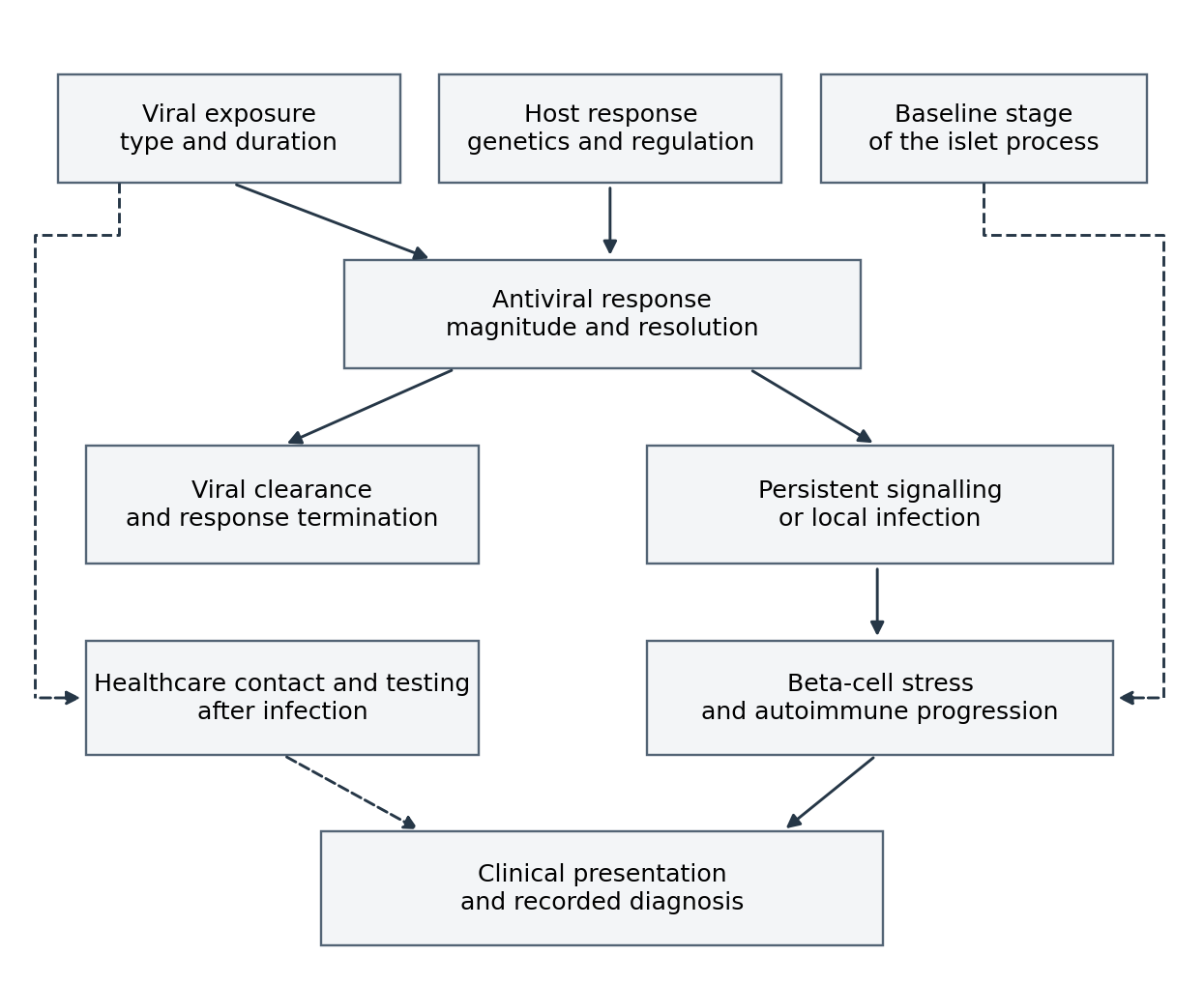
Figure 1. SP Science working causal model. Arrows represent proposed directions to test, not a proven sequence in every patient. The pathway to a recorded diagnosis through investigation is shown separately from the pathway to autoimmunity.
Comparison of the literature suggests five dimensions that need to be distinguished empirically. These are not claimed to be new to world science. The novelty of future work by the centre must be assessed through a complete systematic search and original findings.
The first dimension is kinetics: a prolonged residual signal after stimulus withdrawal may distinguish a harmful response better than peak IFN concentration. The second is specificity: antibody profiles against non-structural proteins may reflect exposure or antigen processing distinct from viral neutralisation. The third is compartment: blood and islet responses may differ. The fourth is stage: the same virus may have different significance before and after IA. The fifth is ascertainment: a short-term increase in recorded diagnoses may occur without a comparable increase in new autoimmunity.
11 Testable hypotheses
| Code | Proposition | Main test | Finding against the hypothesis |
|---|---|---|---|
| H1 | IFN-I response resolution is delayed in a subset of T1D | Repeated cell stimulation and temporal profiling | A precise replicated null effect with adequate power |
| H2 | EV antibody profiles relate to response regulation and progression | Epitopes, functional neutralisation and outcomes | The profile fails to replicate or appears only after the outcome |
| H3 | The association of mild infections with H1 persists after accounting for exposure | Prospective family episodes with objective infection ascertainment | Differences are explained by exposure and recording |
| H4 | COVID more often accelerates existing IA than initiates new IA | Separate analyses of AAb-negative and AAb-positive participants | No stage difference with accurate exposure confirmation |
| H5 | A subgroup with viral markers and residual secretion has a different prognosis | Longitudinal cohort and partner tissue studies | Markers do not predict outcomes outside the training sample |
For H1, the main comparison group, one primary measure and its time point must be fixed in advance. H2 requires separation of viral contact, epitope memory and current infection. For H3, absence of symptoms without confirmed infection must not be counted as rapid clearance. For H4 and H5, prognostic associations do not establish treatment effects.
12 SP Science research programme
12 1 Project P0 Full review and reanalysis of open data
P0 aims to independently reproduce the evidence map and test which conclusions are robust to methods, age and sampling time. Prepare and register a protocol before searching PubMed and Embase, adding other available databases and trial registries. Involve two independent reviewers. Track case reports, preprints, papers from the same cohort and trial follow-up reports separately.
Extract data for each estimate, not only each paper: group, age, participant and outcome counts, material, method, pre-infection stage, interval, effect and 95% CI, adjustments, biases, data availability and funding. Do not pool different endpoints or count one cohort repeatedly within the same quantitative synthesis. For suitable homogeneous groups, prespecify a random-effects model, sensitivity analyses and assessment of small-study effects.
For low-cost functional replication, use Rodrigues' published whole-blood data, the human GEO dataset GSE146338 and the authors' code [68]. This is a proposed analysis, not a completed result. First check licences, metadata, T1D stages, possible participant overlap and adequacy of covariates. The aim is to assess reproducibility of the IFN-I signal and dependence on cell composition, rather than train a classifier on a small sample without external validation.
P0 outputs are a registered protocol, a complete search log, a domain-level bias assessment table, reproducible analysis code and a decision on the P1 primary endpoint. The planning estimate is 6-10 weeks if literature access is available; this is a working estimate, not a commitment by partners.
12 2 Project P1 Kinetics of the antiviral response
P1 is an observational mechanistic study without drug administration. Before the main cohort, perform technical validation using available adult samples with participant consent. Adult technical validation does not replace subsequent study of childhood pathogenesis.
The proposed paediatric pilot has three groups of 30 participants: recently diagnosed autoimmune T1D, provisionally within 100 days of diagnosis; established T1D of at least two years; and controls without diabetes matched for age, sex and calendar period. A preclinical IA subgroup should preferably be obtained through an existing partner cohort or biobank rather than created through new mass genetic screening. Thirty per group is intended to estimate feasibility and variability, not establish a small effect.
The main comparison is new-onset T1D versus controls; longstanding T1D provides an additional comparison. Include clinically stable participants after resolution of acute presentation. Record recent infection, vaccination, other autoimmune disease and medication with dates; use one prespecified rule for repeat visits after infection. The clinical team must define stability criteria and permissible blood volumes before recruitment.
The candidate primary measure is the log2 change in MX1 expression relative to baseline and a paired unstimulated sample, 24 hours after a standardised stimulation period and stimulus removal. This research measure is intended to test persistence of signalling. It is not a validated diagnostic test. Finalise the 24-hour time point and withdrawal procedure after the technical phase, before outcome-based group comparisons.
Secondary measures include IFIT1 and ISG15, IFN-alpha/beta, CXCL10, pSTAT1 kinetics, cell viability and composition. Compare baseline, peak and resolution at prespecified laboratory time points. Include a viral RNA sensing stimulus and separate stimulation of the IFN-I receptor pathway. Poly(I:C) must not be treated as MDA5-specific: contributions of other sensors and the delivery method need control experiments. Deliberately infecting a child or provoking an immune reaction in the participant is unnecessary.
Repeat sampling in a stable state after 8-12 weeks will assess within-person reproducibility. Validate whole blood, fresh PBMCs and cryopreserved cells separately; mixing these materials can create artefactual effects. The partner laboratory must approve analytical conditions, batch controls and measurement limits [62].
Analyse temporal profiles using a mixed model with group, time and their interaction. Prespecify the primary contrast and the minimum scientifically meaningful effect. Report differences and confidence intervals; do not claim an established mechanism solely because p is below 0.05. IFIH1 genotype and associations with AAb remain secondary until there is adequate power for interactions. Interpretation of recent and longstanding T1D must consider HbA1c, cell composition, age, stage, recent exposures and comorbidities, with adjustment sets selected using a causal diagram.
Criteria for progression beyond the pilot include usability of at least 85% of planned samples, no material systematic batch imbalance between groups, acceptable reproducibility and the ability to estimate primary-measure variance. The laboratory must set method-specific technical reproducibility thresholds before the study. Expansion requires a reproducible effect in the expected direction or sufficiently precise data to recalculate sample size. A null pilot with a wide CI is not a refutation.
12 3 Confirmatory sample size
For an illustrative independent two-group continuous endpoint, with two-sided alpha 0.05 and 80% power, the approximation is n per group = 2 × (1.96 + 0.84)² / d². A standardised effect d = 0.5 requires about 63 participants in each main group, or approximately 75 allowing for 15% loss. For d = 0.3, the corresponding figures are about 175 and 206.
These calculations use stated assumptions; they are not an effect forecast or the final P1 sample size. Matching, repeated measures, endpoint distribution, multiple primary comparisons, batches and clustering may change the calculation. Genotype interactions and rare clinical outcomes require substantially more material. Final power calculations should follow technical validation and blinded variance estimation with a biostatistician.
12 4 Project P2 Antigen specificity and viral clearance
Use a subset of P1 samples and independent partner samples before and after seroconversion. First replicate a limited literature-based antigen panel, including structural proteins and the candidate 3D region; broader VirScan or PhIP-seq should be performed through an experienced laboratory [16, 24]. Do not turn a large initial peptide panel into multiple positive hypotheses without adjustment.
Compare binding profiles with functional neutralisation of the relevant viruses in a competent partner laboratory. High binding-antibody titres are not equivalent to effective neutralisation. Repeated RNA detection in naturally obtained serial samples requires confirmation using an independent target or sequencing. A single positive PCR must not be called persistence; define duration and criteria prospectively.
The primary P2 question is whether a prespecified profile replicates in an independent group and precedes IA. Secondary questions concern its relationship with P1 kinetics, neutralisation and duration of viral detection. Without independent replication, stop developing a diagnostic classifier and publish the negative result.
12 5 Project P3 Natural infections and parental observations
P3 tests the relationship between clinically mild infections and measured responses. Follow families with a child with T1D and comparable families without T1D using the same recording procedure. Over 6-12 months, record confirmed naturally occurring family infections, contacts, symptoms, fever duration, school attendance, tests and missed observations. Non-invasive confirmation may be used when medically indicated and consistent with the agreed research protocol.
The estimand is symptom severity and duration given comparable confirmed exposure or infection. Counting colds without an exposure denominator does not answer the question. Account for within-family and seasonal dependence, age, vaccination and contact circumstances. P3 sample size should be based on informative episodes, not simply the number of children. This is an ancillary project and has lower priority than P0 and P1 until H1 has functional support.
The individual observation provided by the research initiator can be recorded as a diary to clarify the phenotype. It cannot retrospectively reconstruct the immune response before diabetes or demonstrate causation. Glucose changes during illness reflect metabolic load and treatment; they are not an independent scale of immune strength.
12 6 Project P4 Partner analysis of preclinical progression
Distinguishing IA initiation from acceleration requires samples before infection and before seroconversion. Partnership with existing cohorts and biobanks is the most economical route. For AAb-negative participants, the endpoint is confirmed persistent seroconversion; for those with multiple AAb, it is progression to clinical disease and changes in secretion. Include repeat AAb confirmation and standardised methods [2, 63].
Treat infection and vaccination as time-varying exposures. Analyse early and later windows separately, with sensitivity analyses for investigation intensity and exclusion of events immediately around diabetes registration. Excluding the first 30 days should be a sensitivity analysis because it can also remove genuine acceleration. Do not define vaccination as ever vaccinated while allocating pre-vaccination person-time to the vaccinated group.
For prognostic analysis of residual beta-cell function, use standardised C-peptide measurements, controlling measurement conditions, age, diabetes duration and concurrent glucose. IAA after insulin treatment begins must not automatically be interpreted as a baseline autoimmune marker: stored samples and pretreatment results matter. Test H5 in an independent sample; significance in one dataset does not establish a clinically usable subtype. Drug-efficacy studies require stronger mechanistic evidence and a separate clinical protocol.
12 7 Project P5 Functional testing of mimicry
P5 becomes appropriate after immune-profile replication or when suitable clones and HLA-typed samples are available. First computationally select a limited set of candidates, then test HLA presentation, recognition by the same TCR and functional effects in a cellular system. Viral and autoantigen control peptides, HLA-mismatched conditions and independent replication are required. Sequence or TCR-clone overlap without functional testing is insufficient.
Test interactions with beta cells in validated human models through a partner. A functional response in a model still does not establish the fraction of clinical cases or explain an individual presentation. Because of cost and technical complexity, P5 is proposed for a second stage rather than as the centre's first project.
13 Quality control and reproducibility
Before recruitment, register the protocol, analysis plan and data dictionary. Name one primary endpoint for each confirmatory question; define exclusions, missing-data handling, detection limits, repeat-analysis rules and multiplicity correction. Label post hoc measures as exploratory. Do not stop at the first nominally significant result.
The laboratory should be blinded to group, with sample order balanced across batches. Record collection-to-processing time, storage, freezing and thawing, RNA quality and cell viability. PCR requires negative and extraction controls, inhibition assessment, analytical sensitivity and confirmation of weak positives. Follow MIQE 2.0 for qPCR validation and reporting [62].
Between-group differences in cell composition can mimic expression changes. Measure cell composition and distinguish whole-blood analysis from isolated populations. Do not substitute arbitrary zeros for cytokine measurements near detection limits. High-dimensional data require separate training and external validation samples; selecting and evaluating a model in the same participants is unacceptable.
Develop a causal diagram for each question in advance. When estimating the total effect of infection, do not automatically adjust for a mediator; in established T1D, distinguish pre-existing factors from consequences of diagnosis. Analyses of household exposure and registry data must account for dependent observations. A biostatistician should check power estimates and qualitative conclusions.
Research involving minors requires approval by a competent ethics committee, consent from the legal representative and age-appropriate assent. Research procedures must not compromise usual care. Plans for returning incidental clinically significant findings and protecting personal data must be defined before recruitment. Reducing or withdrawing insulin to test hypotheses is not part of the programme.
Plan to publish negative findings, distinguish primary and secondary analyses, and disclose funding and conflicts of interest. The scientific lead's and other authors' involvement in a particular publication must reflect actual contributions; authorship and approval must not be assigned in advance.
14 Priorities and decisions for the scientific lead
| Stage | Work | Decision-relevant output | Condition for progression |
|---|---|---|---|
| First 6-10 weeks | P0 and laboratory selection | Verified evidence map and data reanalysis | A reproducible measurable question and sample access |
| Approximately months 2-4 | P1 technical phase | Validated methods and variability estimates | Samples and method provide adequate precision |
| Approximately months 4-12 | P1 pilot and limited P2 | Effects with CIs and feasibility data | Independent confirmation or justified expansion |
| After the pilot | Confirmatory sample and P4 | Temporal sequence and prognostic validation | Adequate power and partner resources |
| Second stage | P5 and clinical proposals | Functional evidence for a candidate mechanism | Replicated data and a separately approved protocol |
Timelines are planning assumptions, not completion promises. Recruitment and biobank access may take longer. No budget has been calculated because laboratory quotations, sample costs and a confirmed team are unavailable. A budget requires itemised costs for coordination and recruitment, laboratory validation, processing and storage, assays, genotyping, biostatistics, transport and independent replication.
The scientific lead is asked to approve the initial P1 question, clinical groups and measure after technical validation; designate a responsible biostatistician and partner laboratory; establish access to preclinical samples; and agree the full P0 review. The project initiator is asked to coordinate and fund these stages. Clinical prescribing and final protocols are the responsibility of the research team and ethics committee.
With limited funding, P0 and the technical component of P1 take priority. Broad immune profiling, mass viral serology or sequencing without a defined endpoint may consume substantial resources without answering a causal question. Additional resources should support independent testing of a specific signal.
15 Conclusion
The evidence supports a heterogeneous model of T1D in which viral exposure and host-response characteristics interact with baseline autoimmune susceptibility. Enteroviruses have the most consistent evidence base among the viral factors examined, but are not established as a single cause of all cases. COVID may be associated with acceleration of some preclinical processes, whereas its contribution to initial IA is population-dependent and uncertain. No reproducible increase in risk has been shown for the routine vaccines studied.
There are genetic and experimental grounds for the coexistence of antiviral protection and autoimmune vulnerability. A relationship with infrequent, mild colds has not been separately established. The most useful SP Science task is to test response duration and specificity, comparing disease stages and samples obtained before seroconversion. Positive findings must replicate independently; sufficiently precise negative findings must change the hypothesis.
How definitive a conclusion can be depends on measured data and alternative explanations. This version contains no original data and therefore supports a research programme rather than announcing a newly established cause of T1D or a ready treatment.
Appendix A Search and the next review stage
Thematic searches were used in variations of: enterovirus type 1 diabetes systematic review meta analysis; TEDDY prolonged enterovirus B shedding islet autoimmunity; pleconaril ribavirin new onset type 1 diabetes three year follow up; nPOD enterovirus pancreas 2025; no evidence persistent enteroviral B RNA sequencing; COVID type 1 diabetes cohort Denmark Sweden Scotland; SARS-CoV-2 islet autoimmunity early childhood; vaccination childhood type 1 diabetes cohort; IFIH1 A946T antiviral protection autoimmunity; interferon signature before autoimmunity; innate immune stimulation whole blood IFN hyper responsiveness; distinct enterovirus antigen landscape; PRV-101 PROVENT follow up; rotavirus vaccination natural experiment; congenital rubella autoantibodies; PRISMA scoping; ROBINS-E; MIQE 2.0.
For a complete subsequent search, retain exact search strings, platform, date, all retrieved records and exclusion decisions. An example PubMed viral search is: ("Diabetes Mellitus, Type 1"[Mesh] OR "type 1 diabetes"[tiab] OR "islet autoimmunity"[tiab]) AND (enterovirus*[tiab] OR coxsackie*[tiab] OR "SARS-CoV-2"[tiab] OR "viral infection"[tiab]). For the immune block, replace the second bracket with (IFIH1[tiab] OR MDA5[tiab] OR interferon*[tiab] OR "molecular mimicry"[tiab]); search the vaccination block separately. These strings are proposed for a future reproducible search and are not presented as an exhaustive export already performed.
The project was not registered in PROSPERO or OSF during preparation of this document. Independent duplicate screening, formal risk-of-bias assessment and original quantitative synthesis are next-stage tasks. This search cannot support claims that no other relevant studies exist anywhere in the world.
Appendix B Minimum pilot variables
| Domain | Variables | Purpose |
|---|---|---|
| Baseline status | Age, sex, diagnosis date, AAb and dates, stage | Distinguish new-onset, longstanding and preclinical disease |
| Clinical conditions | HbA1c, concurrent glucose, medication, comorbidity | Account for state at measurement |
| Exposures | Infections, tests, symptoms, vaccination dates, household contacts | Distinguish exposure, infection and clinical course |
| Sample | Collection and processing times, material, batch, storage, viability | Control pre-analytical bias |
| Function | MX1, additional ISGs, cytokines, pSTAT1 and time points | Test response magnitude and resolution |
| Specificity | EV epitopes, neutralisation, repeat RNA under protocol | Distinguish memory, clearance and possible persistence |
| Follow-up | Repeat visit, missing visits, exclusion reasons, protocol-defined C-peptide | Assess reproducibility and association with outcomes |
References
Numbering corresponds to citations in the text and evidence register. Sources checked on 12 October 2026. Preprint 31 is identified separately.
[18] Downes K et al. Reduced Expression of IFIH1 Is Protective for Type 1 Diabetes. PLoS ONE. 2010.
[39] Walker GJ et al. SARS-CoV-2 Infection and Childhood Islet Autoimmunity. JAMA Pediatrics. 2025.